From noted collector and researcher Tony Schnurr
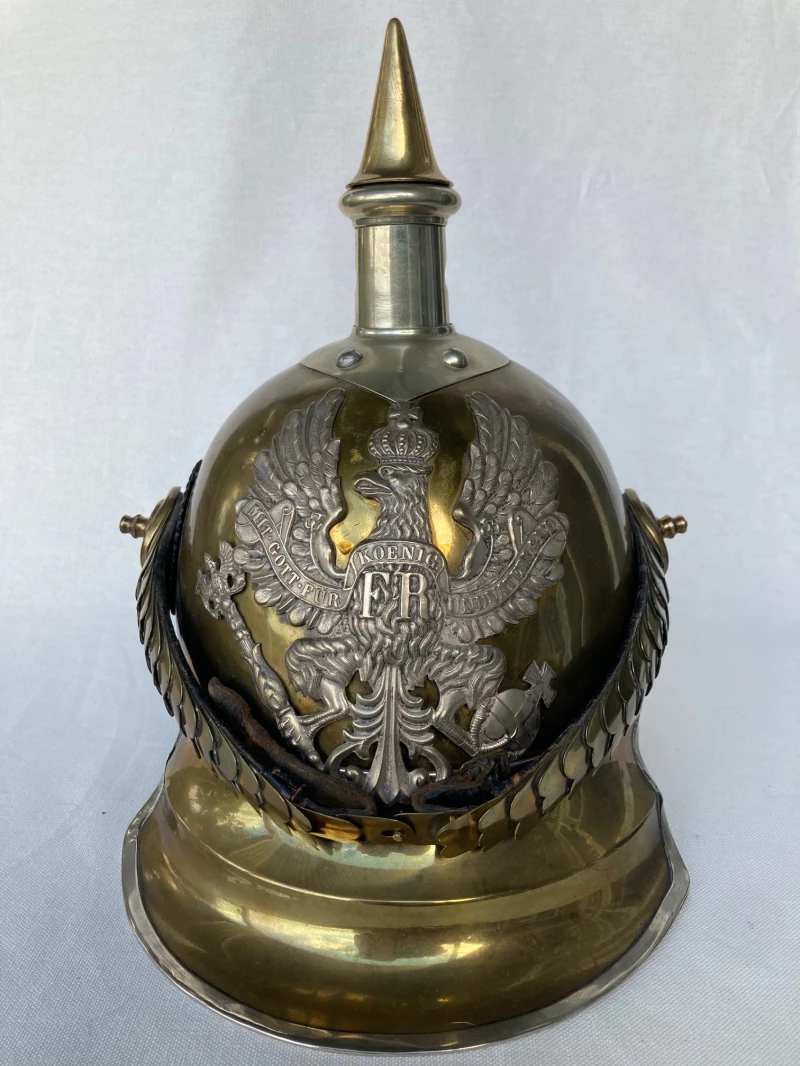
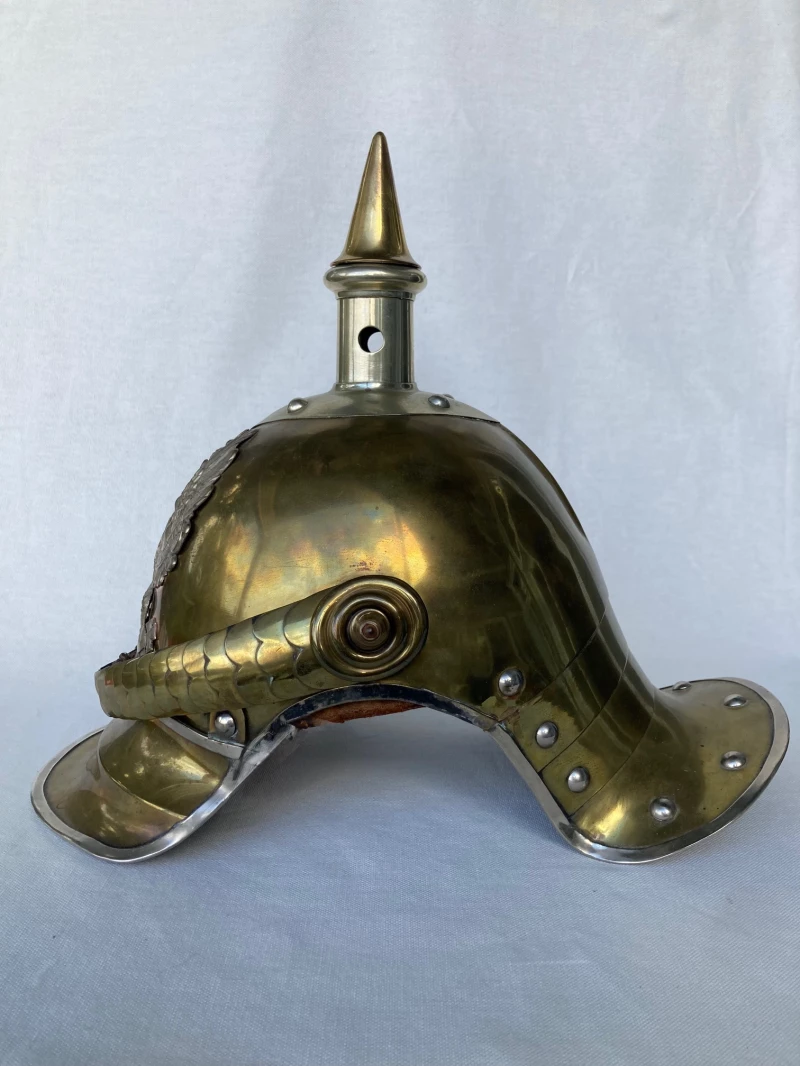
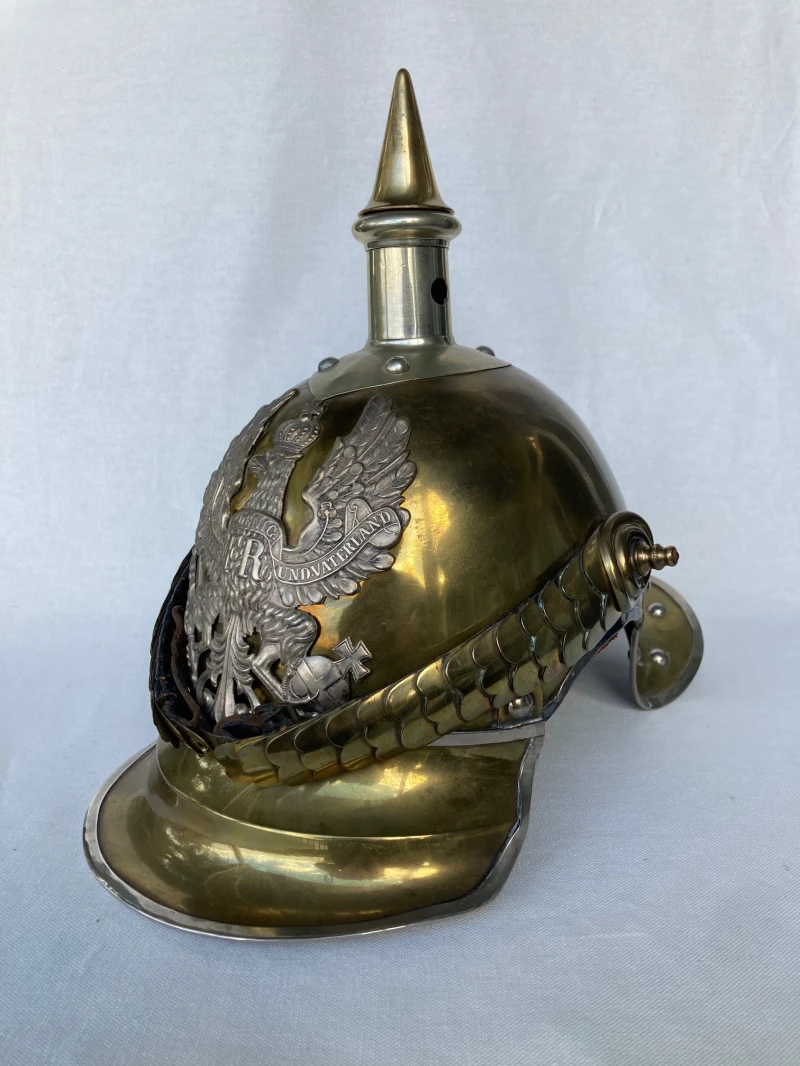
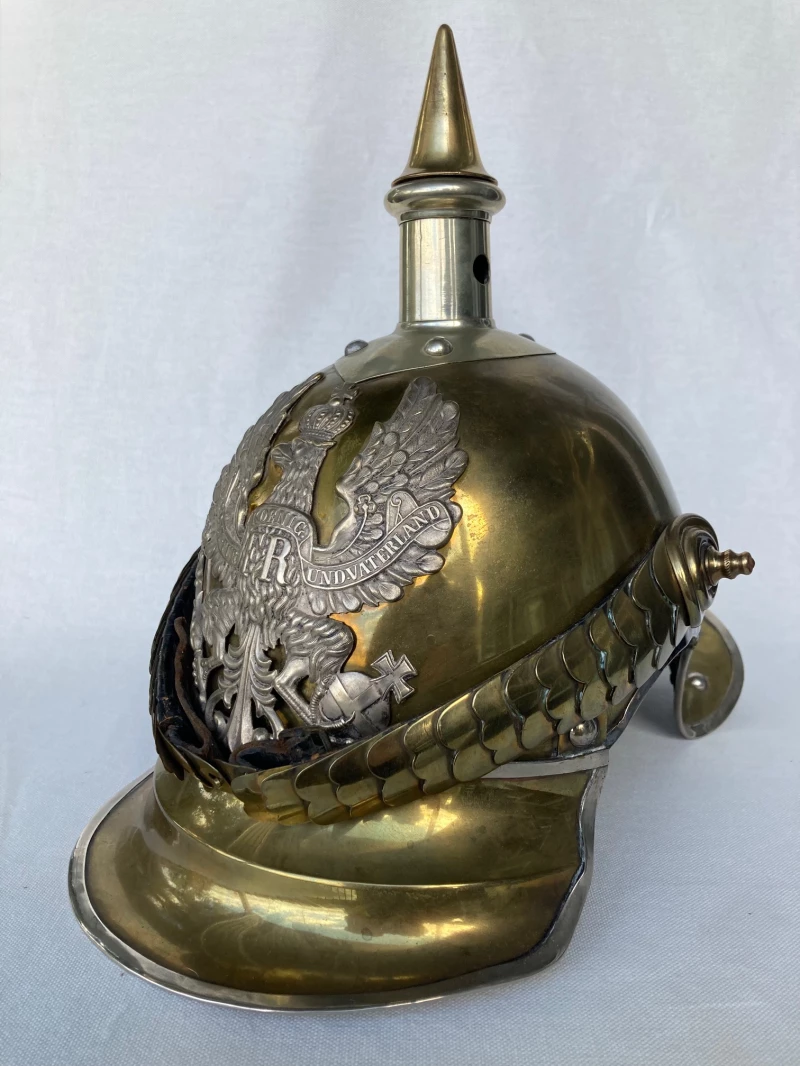
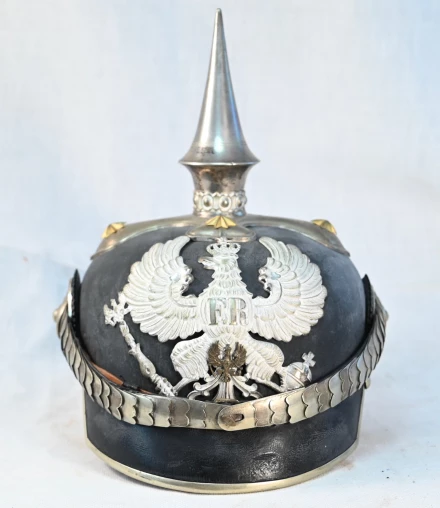
1843/1860 Metalhelm for Kürassier-Regt. Nr.6
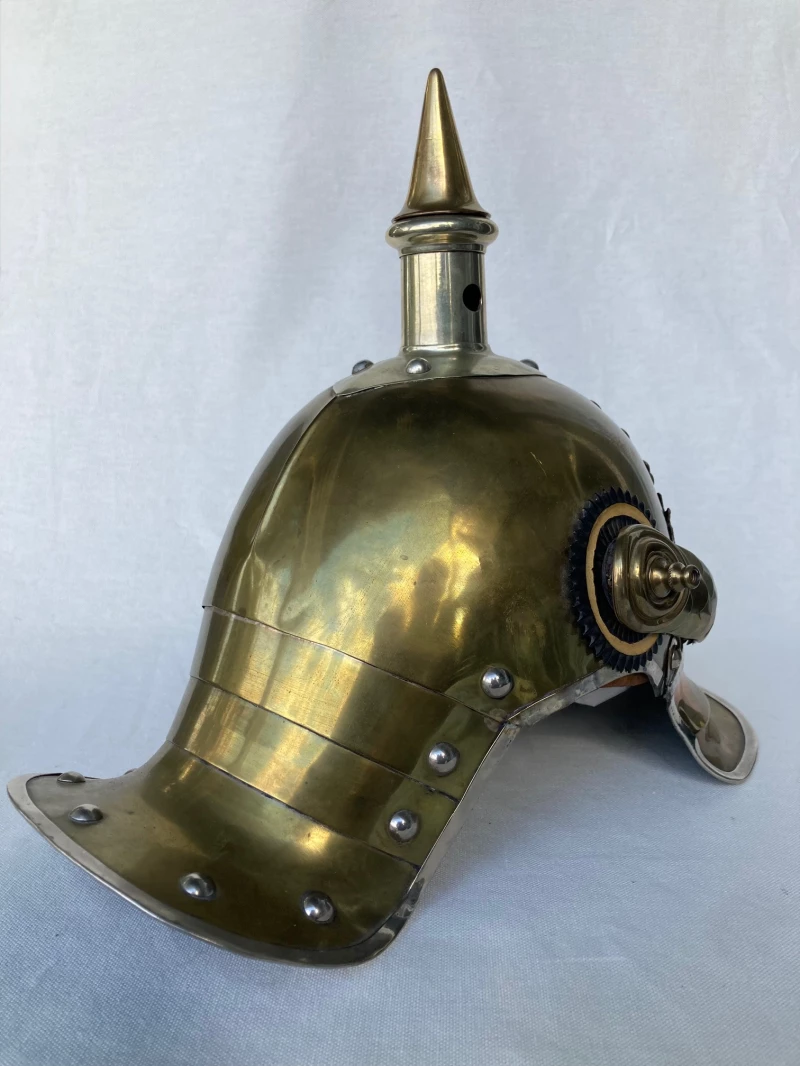
What makes it an 1843 is that enormous front visor that sits on a rotating pivot attached to the helmet on each side. there is one small rivet on the front. The idea being that you could smash it up if you needed to in an emergency. However, if you do a face-plant from a horse, then you have bigger problems.… In 1853 these enormous visors were moved to the inside of the shell on newly manufactured Metalhelme, however this Metalhelm escaped any modification.
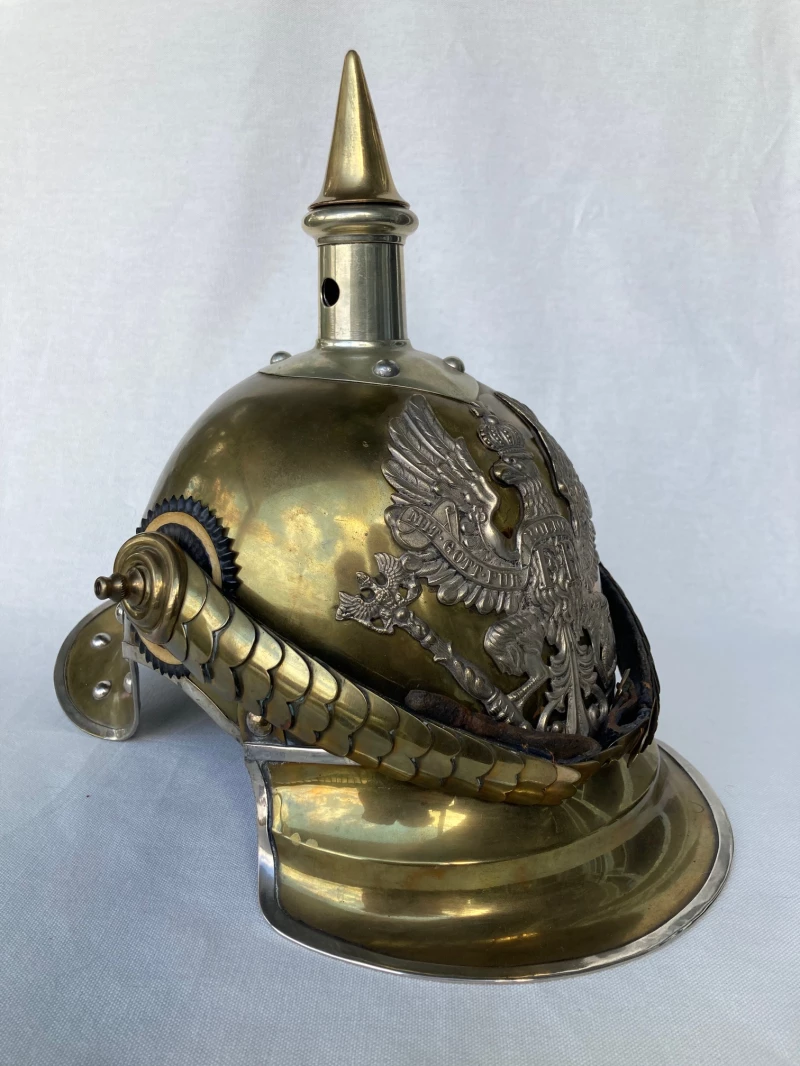
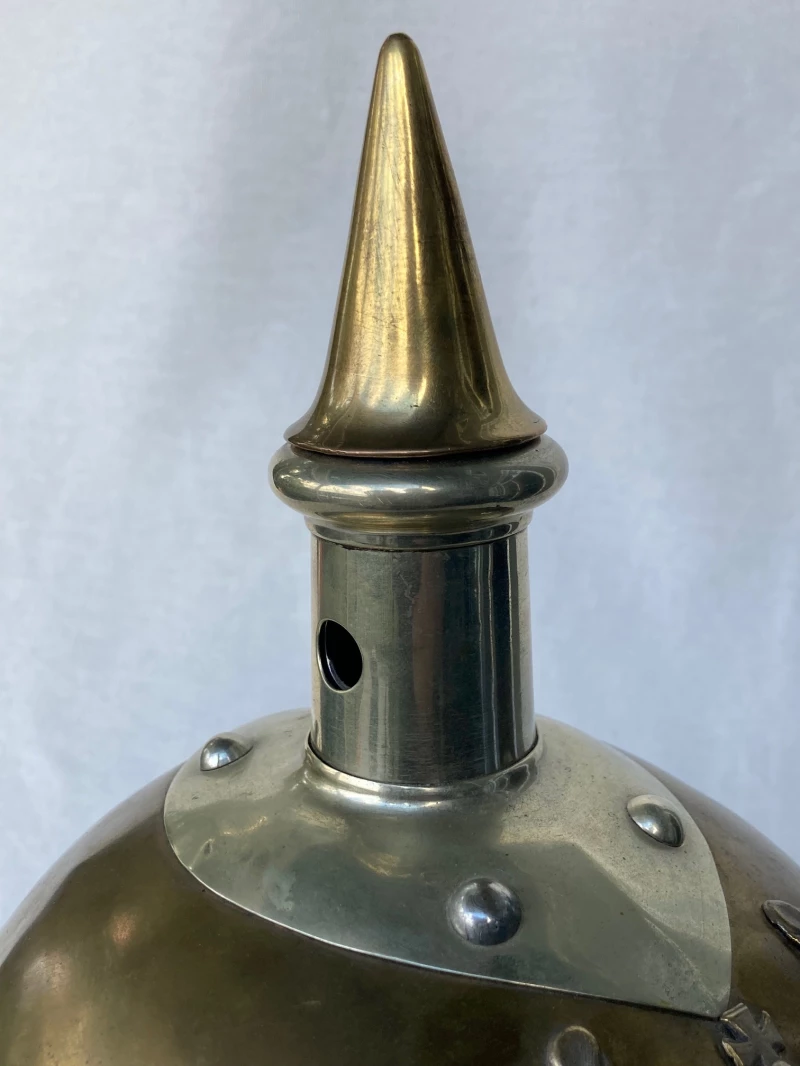
The helmet spike is the very tall first version which immediately makes the helmet appealing. It also has the distinctive “ovoid” egg shape to the shell. The eagle is the 1842 eagle shape (Schwarzenegger arms) adopted in 1842. However, it has the mandatory 1860 Fatherland Bandeau. That makes this eagle a very scarce pattern, as it is a one piece stamping. Usually after 1860 the 1842 eagle had an FATHERLAND Bandeau soldered on top of it. Note: Preussen did not adopt the Metalheme until 1843, but the eagle was the 1842 pattern.
Then the helmet shows evidence of being modified a third time, with the 1867 strip of trim that connects the front and rear visor. A significant improvement for the ears of Kürassier. Still after all these modifications the enormous chinscales are attached to the shell with long 1842 pattern screw posts. Kokarde is 64mm.
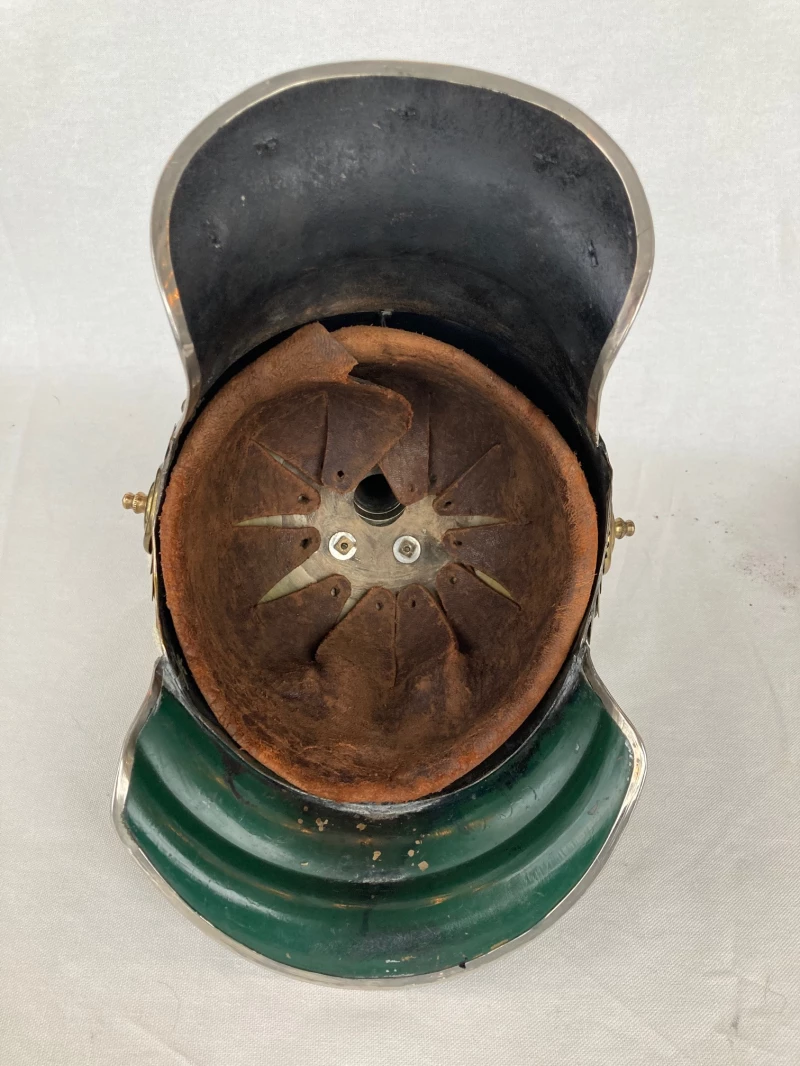
One of the most interesting aspects of this helmet is the interior. It appears to be untouched and original to the helmet from the era. Although these KR6 helmets were supplied by private manufacturers, there is no manufacturer mark (important!) Notice the back of the articulating neck plates have a few scraps left of what was once black leather lining on the neck, now gone and the back plates have been painted black. Black paint was eventually adopted for all Metalhelme.
Almost done. Hang on!
In 1843 when these Metalhelm were first introduced, the Honorary Head of Brandenburg Kürassier Regiment Nr.6, Tsar Nicholas of Russia, asked King Friedrich Wilhelm IV for permission to give this Regiment a set of Tombak helmets as a special award (Tombak is an alloy made from a combination of copper and zinc which results in a copper colour). This request was met, and with the AKO from the 5th April 1843 the 6th Kürassier-Regt. Nikolas I. von Rußland of Russia were authorized to wear Tombak helmets like the Guard.
But there is a problem. The ironworks at Jaeger were already in full production of two Regiments of Tombak, and eight Regiments of steel Metalhelme. How could they just add one more Regiment worth of Tombak helmets? Most importantly, it is not stamped Jaeger. A different company made it. Here is where the lack of Jaeger is important.
My hypothesis is this. Every 1843 helmet for KR6 that I have seen, is a brass colour. Not the copper colour of Tombak. Russian Kürassier Heavy Cavalry wore brass helmets, which suggests that the initial issued KR6 helmets were German made, but in a brass/gold colour. Almost like not enough copper was added to the mix? Brass chinscales are correct, as a selling point from Jaeger, was that the Kürassier could use the brass chinscales from the their leather Tschako until supplies were used up. After the Franco-German War of 1870/1870 newer manufactured Metalhelme and chinscales were in Tombak.
Kammer issued Kürassier Koller
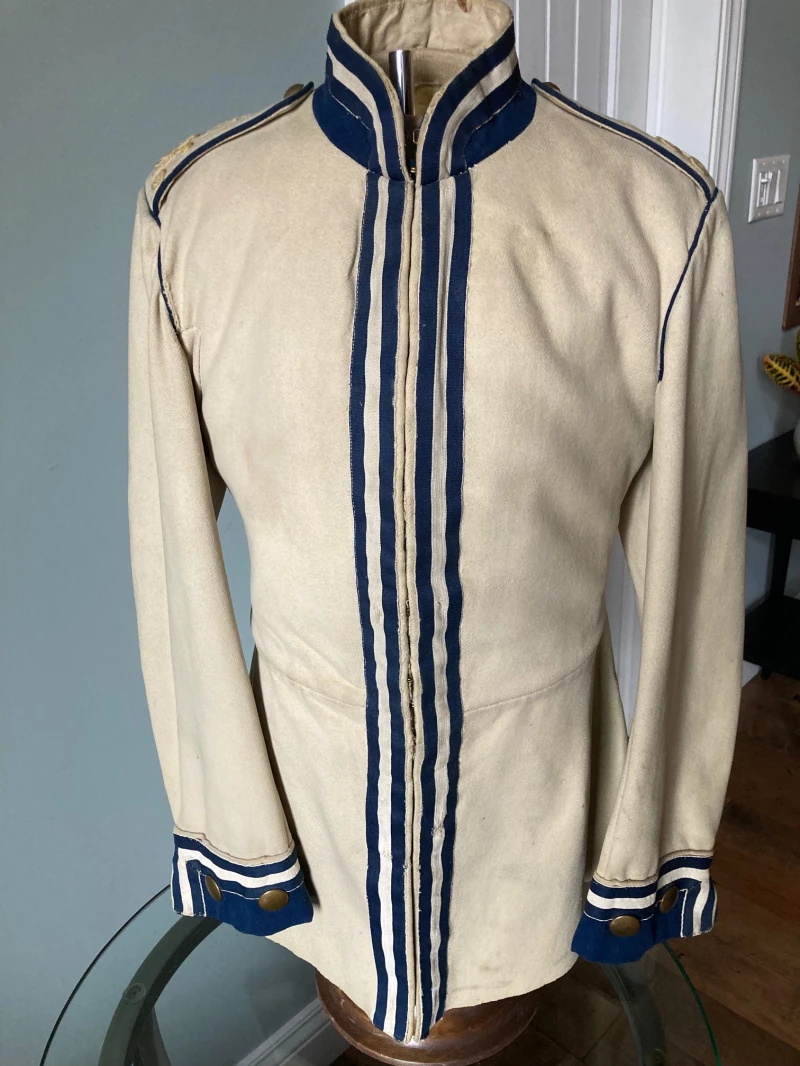
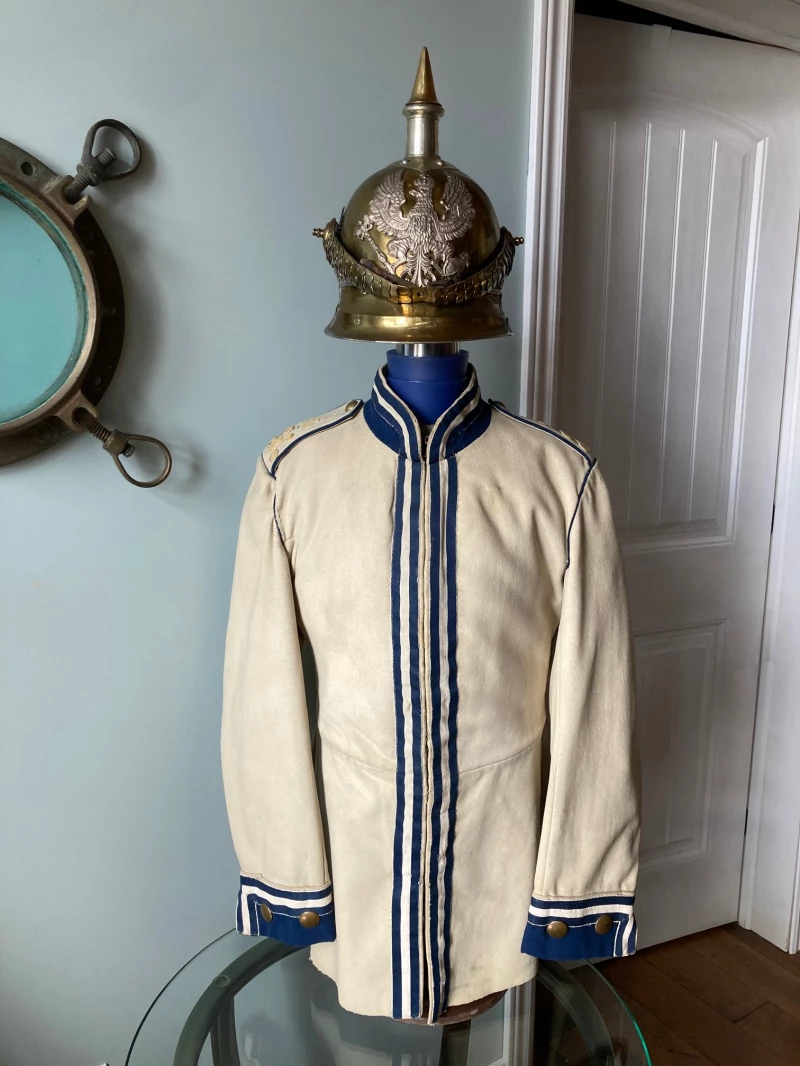
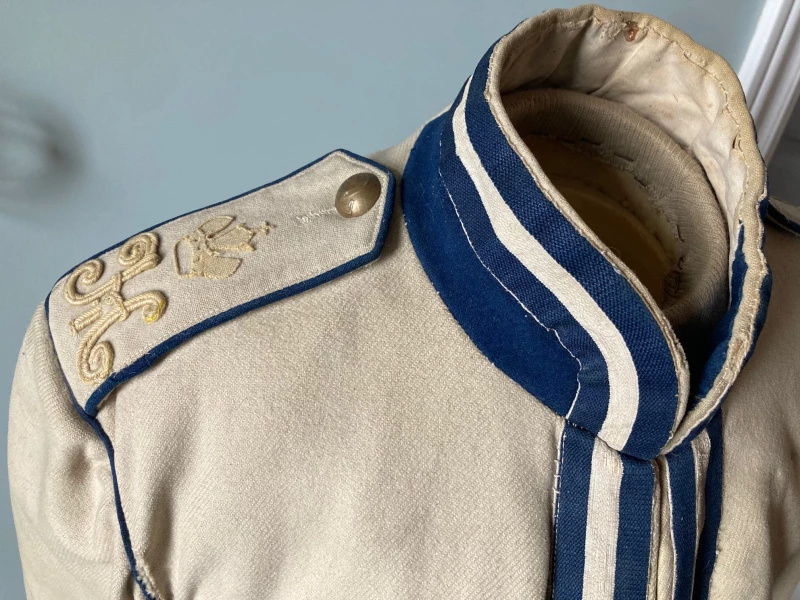
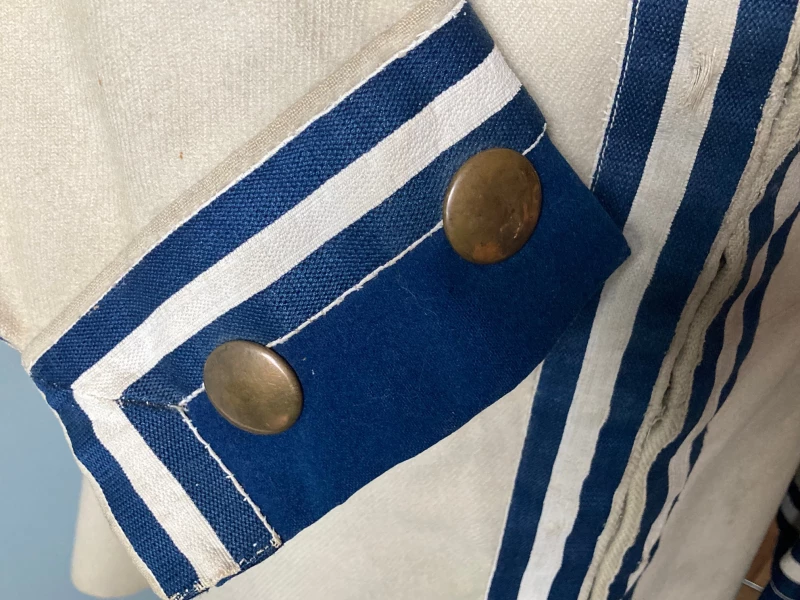
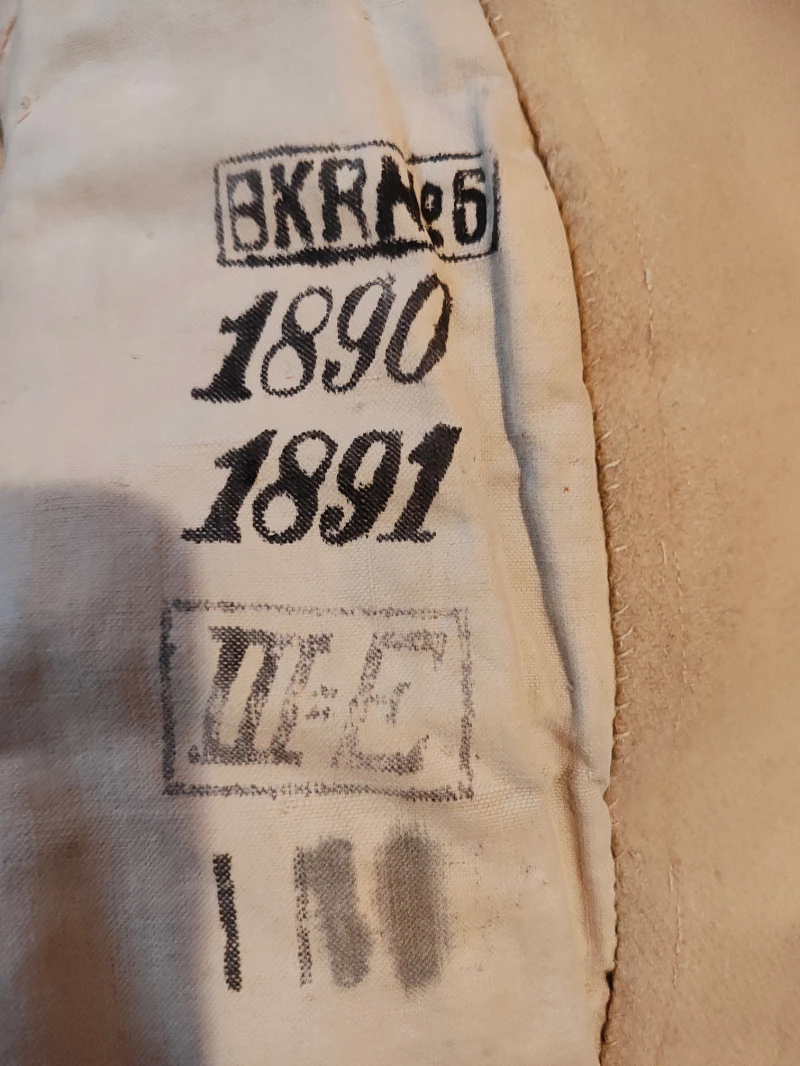
Now to this wonderful Koller for Kürassier-Regt. Kaiser Nikolas I. von Rußland. It is Kammer issued and dated 1890 officially making it my earliest Kammer issued uniform. A Kammer is a clothing depot, or in English, a Quarter-Master. The high collar with its distinctive curve, the cuffs, seams, and piping on the front opening and rear skirt of the Koller were piped in the regimental facing color. Note the bottom is just cut without him. This is a distinctive Preussen characteristic. Shoulder straps were white and also piped in the Regimental color, while officers wore epaulettes. For KR6 the Regimental colour was Russian Blue with the cypher of Kaiser Nikolas I in yellow cord. The Koller border (Kollerborte) was white fabric edged in Regimental facing colors, and ran the entire length of the front, collar, and cuffs The front is closed with sixteen alternating hook and eyes the entire length of the front, plus two on the collar.
Preussen Kürassier Koller are arguably the most difficult to find pre-1914 Prussian uniforms. So now we have KR6 Metalhelm on a KR6 Koller as it was meant to be.
See also
"Beamte” and Military Specialty Troops of the Imperial German Army - Part 1
Part 1 of more to come!
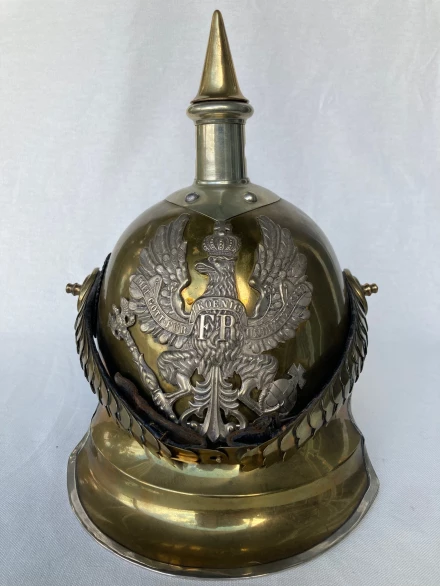
A study on the model 1843 - 6th Kurassier Pickelhaube
From noted collector and researcher Tony Schnurr

Huis Doorn
After the Ciney, Belgium Show, Remy and I had the opportunity to visit House Doorn in the Netherlands. This was Kaiser Wilhelm II home in exile until his death in 1941. Before we tell you about our visit we want to give you a little background on its importance.